

Workplace
Travel Plan
Muse Places and Stockport MBC
Stockport Exchange Phase 4
Muse Places and Stockport MBC
Stockport Exchange Phase 4
Stockport
January 1970
This travel plan has been produced by Civic on behalf of Muse Places and Stockport MBC using the TfGM Workplace Travel Planning Toolkit.
https://travelplantoolkit.azurewebsites.net
https://travelplantoolkit.azurewebsites.net
Legal Disclaimer
This document, constituting a ‘travel plan’, has been produced as a result of information submitted to www.tfgm.com/travelplantoolkit
This travel plan has been written on behalf of the relevant developer by the third party engaged by that developer to design the travel plan. It has not been written by Transport for Greater Manchester ("TfGM").
Unless and until this travel plan has been released by a local authority into the public domain, it remains private and confidential, and is not to be relied on by, or made available to, any other party.
TfGM will not be liable for any loss or damage, whether in contract, tort (including negligence), breach of statutory duty, or otherwise, even if foreseeable, arising under or in connection with any use of, or reliance on, the content of this travel plan by any person.
Contents
| 1 | Introduction |
| 2 | Site Description |
| 3 | Travel Plan Scope |
| 4 | Travel Plan Delivery |
| 5 | Conclusions |
| A | Appendix A: User Uploads |
| 1 | Introduction |
| 1.1 | Proposed Development |
| 1.1.1 | Development Name | Stockport Exchange Phase 4 |
| 1.1.2 | Developer Name | Muse Places and Stockport MBC |
| 1.1.3 | Site Address | 3 Stockport Exchange, Railway Road, Stockport |
| 1.1.4 | District | Stockport |
| 1.1.5 | Site Postcode | SK1 3GG |
| 1.2 | Context |
| 1.2.1 | Development planning process stage | Development planning |
| 1.2.2 | Reason for submission | |
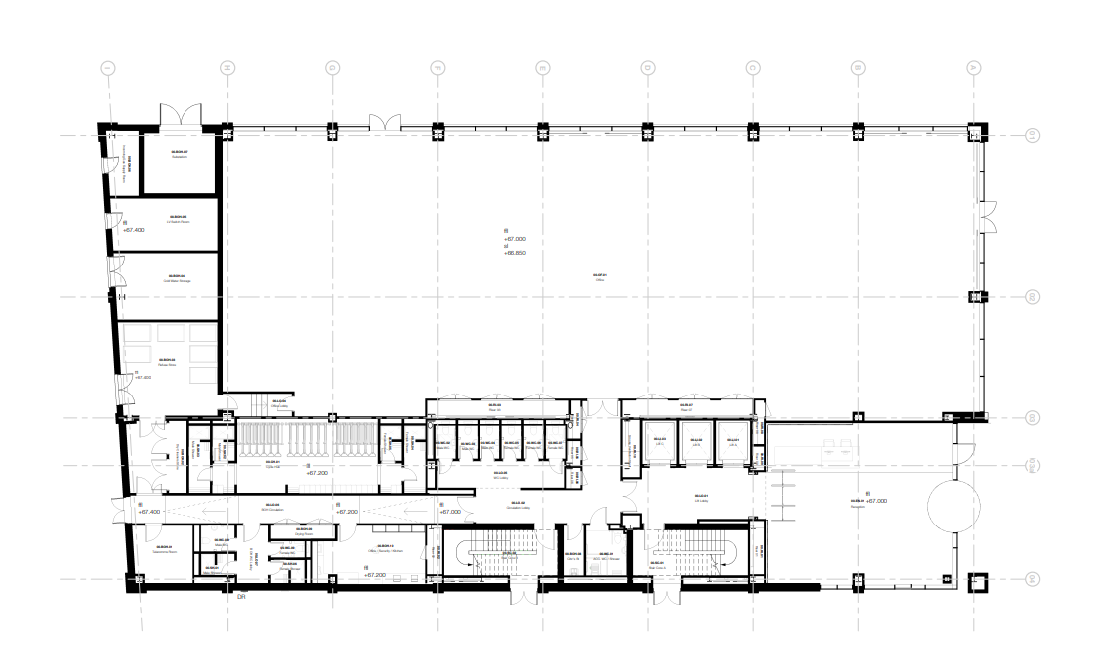
This Travel Plan has been prepared by Civic Engineers on behalf of the Joint Venture (‘JV’) between Stockport MBC and Muse Places, and is submitted to discharge condition 21 of the reserved matters planning permission (DC/081773) at Stockport Exchange. The reserved matters planning application was for Phase 4 of the Stockport Exchange development which comprises a total of 7,630sqm of office space over seven floors, including ground. There is internal ground floor cycle storage for 36 cycles and public realm landscaping associated with the development. Condition 21 states: Within 6 months of the development hereby approved being occupied and brought into use a travel plan for the development shall have been submitted to and approved in writing by the Local Planning Authority and have been brought into operation. The approved travel plan shall be operated at all times that the development is occupied and in use and shall be reviewed and updated on an annual basis in accordance with details that shall be outlined in the approved plan. The travel plan and all updates shall be produced using the online TfGM Travel Plan Toolkit and in accordance with current national and local best practice guidance. Reason: To ensure that measures are implemented that will enable and encourage the use of alternative forms of transport to access the site, other than the private car, in accordance with Policies CS9 'Transport and Development', T-1 'Transport and Development' and T-3 'Safety and Capacity on the Highway Network' of the Stockport Core Strategy DPD. The building began to be occupied in April 2024 with Hurst Accountants being the first tenant to move in, they occupy the top floor. There are approximately 100 staff in the office most days, but the staff have flexible working and therefore occupancy rates are not always steady throughout the week. |
||
| 1.2.3 | Occupier | To date: Hurst Accountants, more to follow. |
| 1.3 | Site Map |
| 1.3.1 |
| 1.4 | Planning Policy |
| 1.4.1 | Stockport Transport and Highways draft SPD Stockport DPD Core Strategy |
| 1.5 | Local Transport Initiatives |
| 1.5.1 | Funding to make changes to the A6/Railway Road junction to improve access for pedestrians and cyclists. |
| 1.6 | Traffic Conditions |
| 1.6.1 | Is there a Transport Assessment or Transport Statement associated with this site? | No |
| 1.6.2 | Is there a Transport Assessment or Transport Statement associated with this site? | No |
| Has traffic data been derived from another source? | No |
| 2 | Site Description |
| 2.1 | Introduction |
| The purpose of this section is to outline the key details about the site and establish existing site conditions that can be classed as issues or opportunities for improving sustainable travel. These are used to identify objectives and targets in the next stage of the process. |
| 2.2 | Basic Information |
| 2.2.1 | The current site | |
| Recently completed development on Railway Road, Stockport, part of wider Stockport Exchange masterplan. | ||
| 2.2.2 | The current site | |
| n/a - development is now occupied as office. | ||
| 2.2.3 | Proposed land use | Employment - Business and Industrial (Class B) |
| Sub-category | B1 – Business | |
| 2.2.4 | Gross Floor Area (m2) | 7,630 |
| 2.2.5 | Main planning application number | - |
| Other planning application numbers | DC/081773 | |
| 2.2.6 | Expected date of occupation | 01/04/2024 |
| 2.2.7 | Other site details | None Applicable |
| 2.3 | Adjacent Developments |
| 2.3.1 | Are there any adjacent developments currently being progressed within one mile of the site? | Yes |
| 2.3.2 | Stockport Exhange Phase 5-8 | |
| Development type | Employment - Business & Industrial (Class B) | |
| Sub-category | B1 – Business | |
| 2.4 | Site Assessment: Site Information |
| 2.4.1 | Is this a new development, an expansion or a redevelopment? | Redevelopment |
| 2.4.2 | Describe how long each of the building phases on site are expected to last | |
| Phases unknown at this point. | ||
| 2.4.3 | How will the site be managed, particularly if the site is going to be occupied by multiple tenants? | |
The Travel Plan Coordinator for Phase 4 will be the Managing Agent’s General Manager. The details of this person are currently being determined, and will be provided to Stockport Council (SMBC) when available. The contact number for the General Manager is: 0161 477 6944. The responsibilities of the Travel Plan Coordinator are as follows: • Implementing the Travel Plan on behalf of all businesses at the development, • Delivering the actions in Table 2 and measures in Table 3 which have ‘Travel Plan Coordinator’ in the responsibility column, • Communicating the Travel Plan and travel options to the development, including promotion of the benefits of travelling by sustainable modes, and acting as a point of contact for people working at the development, • Carrying out annual surveys and reporting on findings to SMBC (as LPA), and • Engaging with businesses as they move to the development about their role in disseminating sustainable travel options to their staff. Travel Plan surveys will be carried within 6 months of the first business moving to the development and will be repeated each year for 5 years after first occupation. This should be in the same month each year to allow year-on-year comparison, as month/seasons/time of school year impacts on how people travel. The survey could form part of a wider survey with other phases of Stockport Exchange, if appropriate Within 2 months of the end of the survey period each year a Monitoring Report will be produced and sent to SMBC for discussion. This will contain: • Businesses at the development and number of employees, • Travel survey methodology and results, • Analysis of qualitative survey responses, • An analysis on the effectiveness of the Travel Plan, and • Proposals for changes/additions to agreed measures. |
||
| 2.4.4 | Site employees | 100 |
| 2.4.5 | Site residents | No information provided |
| 2.4.6 | Site visitors | No information provided |
| 2.4.7 | Other user types on site | No information provided |
| 2.4.8 | Opening time | 08:00 |
| 2.4.9 | Closing time | 18:00 |
| 2.4.10 | Are any shift workers expected to be employed on site? | No |
| 2.4.11 | Are there any Traffic Regulation Orders (TROs) or parking restrictions in force in the area around the site? | Yes |
| More details | ||
| Significant parking restrictions around the site, promoting public transport and active travel usage. The general purpose of TRO's is to manage the operation and safety of the highway network, with consequent benefit of discouraging car travel and encouraging sustainable travel choices. | ||
| 2.5 | Site Assessment: Walking |
| 2.5.1 | ||
| 2.5.2 | Key locations within walking distance (2km) | |
| There are many terraced roads and suburbs surrounding the site with associated parks and shops. There is also a large retail park and two train stations within a 2km walk of the site. | ||
| 2.5.3 | Is the local area perceived as safe for pedestrians? | Yes |
| 2.5.4 | Is there an active street frontage in the area surrounding the site? | No |
| 2.5.5 | Is there street lighting on routes to the site from expected popular locations? | Yes |
| More details | ||
| Streets around the site have ample lighting and can be considered well-lit. | ||
| 2.5.6 | Are footways and pedestrian crossings provided on popular routes to/from the site? | Yes |
| More details | ||
| There are 2m footways along A6 Wellington Road and Railway Road as well as several Toucan crossings to facilities at approx. 100m intervals. This road is the main access by pedestrians to the site. | ||
| 2.5.7 | Are local footpaths maintained well and in a desirable condition on popular routes to/from the site? | Yes |
| More details | ||
| Good quality paving that show no significant defects along Wellington Road and surrounding the site. | ||
| 2.5.8 | Are any improvements to walking infrastructure in the area being carried out as part of the development? | No |
| 2.6 | Site Assessment: Cycling |
| 2.6.1 | ||
| 2.6.2 | Key locations within cycling distance (5km) | |
| The area accessible by bicycle within 5km covers the town of Stockport and includes every amenity expected of a modern town. | ||
| 2.6.3 | On-road infrastructure within cycling distance (5km) | |
| There is a dense network of on-road cycle lanes as well as cycle friendly roads and off road paths that allow safe travel for cyclists. | ||
| 2.6.4 | Off-road infrastructure within cycling distance (5km) | |
| There is access to the NCN route number 62 along the River Mersey that leads from Hyde to Booth Green. This route can be accessed from King Street West. | ||
| 2.6.5 | Local topography | |
| Terrain is ideal with upward gradients being on the outskirts of Stockport rather than inside the town. | ||
| 2.6.6 | Are any improvements to cycle infrastructure in the area being carried out as part of the development? | No |
| 2.6.7 | Total number of cycle spaces that are allocated to the site | 36 |
| How many of these spaces are long stay cycle stores? | 36 | |
| How many of these spaces are short stay cycle stores? | No information provided | |
| 2.6.8 | Location of cycle parking | |
A secure cycle store on the ground floor of the development. Visitors are able to park at the relocated cycle parking in the landscaping outside the leisure centre. Cycle parking is also available at the station and in a dedicated room in the Stockport Exchange Station Car Park. |
||
| 2.6.9 | Features of cycle parking | |
The cycle store has direct access to four showers and lockers are provided within the store. There are another two showers separate from the cycle store that staff can also use to get ready for work or after exercising during their lunch break and there is a drying room accessible from the corridor. Visitors will be able to park at the relocated cycle parking in the landscaping outside the leisure centre. Cycle parking is also available at the station and in a dedicated room in the Stockport Exchange Station Car Park. |
||
| 2.6.10 | Does cycle parking provide for site visitors, as well as site employees? | No |
| 2.6.11 | How many lockers are proposed for the site? | 4 |
| 2.6.12 | Are associated drying facilities proposed for the site? | There is a drying room accessible from the corridor. |
| 2.6.13 | ||
| Is the site located within an 800m walking distance of any of Greater Manchester's Cycle Hubs? | Yes | |
| Nearby cycle hubs | ||
| Stockport Station | ||
| 2.6.14 | How many motorcycle parking spaces are allocated for the site? | No information provided |
| 2.6.15 | Where are the motorcycle spaces located on site? | |
| N/A - motorcycle parking available at the two MSCPs adjacent to the development. | ||
| 2.6.16 | If motorcycle parking is provided, please describe its main features | |
| N/A | ||
| 2.7 | Site Assessment: Bus |
| 2.7.1 | Key bus services within a 5 minute walk of the site (400m) | |
| 2.7.2 | Details about the number of services | |
| 6 | ||
| 2.7.3 | Details about locations served | |
Hazel Grove - Manchester Manchester – Hazel Grove Manchester Airport - Buxton Buxton – Manchester Airport Manchester Airport – Stockport Stockport – Manchester Airport Wythenshawe – Stockport Stockport - Wythenshawe Stockport – Bredbury circular Altrincham – Stockport Stockport- Altrincham |
||
| 2.7.4 | Details about bus frequency | |
| The nearest pair of bus stops to the site are on the A6, about 200m to the northeast of the site. From here there are many northbound and southbound services to locations including Manchester city centre, Manchester Airport, Stockport centre, and Buxton among others. An overview of the services stopping at these stops with a frequency of more than one bus per hour is provided in Table 1, other services stop here but on a frequency of one bus per hour or less. In total there are more than 30 services per hour in each direction serving these stops. The times chosen for the table represent times when people might want to be travelling and are not necessarily the times when the bus service is operating at its peak frequency. | ||
| 2.7.5 | Details about the earliest bus service | |
| 5am | ||
| 2.7.6 | Details about the last bus service | |
| 11pm | ||
| 2.7.7 | Are there any key locations that are not served by the bus routes identified above? | No |
| Bus ticketing: descriptions and prices | ||
| 2.7.8 | How much is an average return bus fare to and from the site? | £2 |
| 2.7.9 | Weekly bus tickets | |
Stepping Hill 7 Day MegaRider- £8.50 Manchester 7 Day MegaRider- £21.00 |
||
| 2.7.10 | Monthly bus tickets | |
| Manchester 28 Day MegaRider- £77.50 | ||
| 2.7.11 | Annual bus tickets | |
| None known | ||
| 2.7.12 | Is there any local infrastructure in place that will benefit buses? | Yes |
| More details | ||
| Covered bus shelters, many pedestrian crossings, easy access to Stockport station. | ||
| 2.7.13 | Are any new bus services being provided (or existing services improved/altered) as part of the development? | No |
| 2.8 | Site Assessment: Tram |
| 2.8.1 | ||
| 2.8.2 | Is the site located within a 10 minute walk (800m) of a tram stop? | No |
| 2.9 | Site Assessment: Train |
| 2.9.1 | ||
| 2.9.2 | Is the site located within a 10 minute walk (800m) of a train stop? | Yes |
| Nearby train stations | ||
| Station name | Distance from site | |
| Stockport | 194 metres | |
| 2.9.3 | Details about the number of services | |
| 25 per hour | ||
| 2.9.4 | Details about locations served | |
| Liverpool, Manchester, Cleethorpes, Buxton, London and intermediate locations. | ||
| 2.9.5 | Details about train frequency | |
| High frequency | ||
| 2.9.6 | Details about the earliest train service | |
The site is around a 100m walk to the east of Stockport train station. The station has a ticket office and ticket machines, the ticket office is open Monday-Friday 05:00-20:30, Saturday 06:30-19:30, and Sunday 08:00-19:30. Staff help is available at the station Monday-Friday 04:50-02:15, Saturday 04:45-00:30, and Sunday 07:00-01:30. There is a waiting room, seating area, toilets, refreshment facilities, and shops within the station. The station provides frequent services to Manchester Piccadilly, and other services locally and nationally to destinations including Buxton, Bournemouth, Swansea, London, Liverpool, Norwich, Stoke-on-Trent, Alderley Edge, Chester, Crewe, and Bristol. At peak times there are 25 services an hour from the station, nine of which terminate at Manchester Piccadilly. |
||
| 2.9.7 | Details about the last train service | |
| 11:30pm on weekdays. | ||
| 2.9.8 | Are there any key locations that are not served by the train services identified above? | No |
| Train ticketing: descriptions and prices | ||
| 2.9.9 | How much is an average return train fare to and from the site? | £5 |
| 2.9.10 | Weekly train tickets | |
| Weekly Stockport to Manchester- £22.20 | ||
| 2.9.11 | Monthly train tickets | |
| Monthly Stockport to Manchester- £85.30 | ||
| 2.9.12 | Annual train tickets | |
| Annual Stockport to Manchester- £888 | ||
| 2.10 | Site Assessment: Public Transport Infrastructure |
| 2.10.1 | Are walking routes to nearby bus/tram stops or train stations safe and convenient to use? | |
| Yes, both bus stops and the train station are well lit and very publicly visible. They are also in densely populated areas with suitable pedestrian infrastructure and adequate cycling infrastructure. | ||
| 2.10.2 | Are nearby bus/train/tram stops in a desirable condition? | |
| Yes. The shelters for the bus stops are in good condition however the road markings for the bus stops are worn and require replacing. | ||
| 2.10.3 | Is there up-to-date timetable information available at nearby stops? | Yes |
| 2.10.4 | Are there any Park and Ride services available for commuters to the site? | No |
| 2.10.5 | Are any improvements to public transport infrastructure being carried out as part of the development? | No |
| 2.11 | Site Assessment: Parking |
| On Site Parking | ||
| 2.11.1 | How many car parking spaces are allocated for the site? | No information provided |
| 2.11.2 | How many accessible parking spaces have been provided for people with disabilities? | No information provided |
| Parking Allocations | ||
| 2.11.3 | Staff Parking | No information provided |
| 2.11.4 | Customer Parking | No information provided |
| 2.11.5 | Visitor Parking | No information provided |
| 2.11.6 | Delivery Parking | No information provided |
| 2.11.7 | Other Parking | No information provided |
| 2.11.8 | What security measures are proposed for on-site parking? | |
| None as parking is not on-site. | ||
| 2.11.9 | How is car parking expected to be managed on site? | |
Car parking for people working at the development is available either at the 400-space multi-storey car park which is part of Stockport Exchange and is for use by people working at Stockport Exchange only, or in the adjacent 1,000-space multi-storey car park which was delivered at Phase 1, known as Stockport Exchange Station Car Par. The latter can also be used by visitors to the development. Both car parks are accessed from Railway Road. Tenants of phase 4 of the development get an allocation of parking spaces within the Stockport Exchange MSCP based on how many spaces they have leased. When employees arrive by car there is an ANPR monitor that tells them which bay to park in that day. |
||
| 2.11.10 | Is the site located within a controlled parking zone? | Yes |
| What are the controlled zone hours of operation? | ||
| Double yellows along Railway Road. | ||
| 2.11.11 | Is the site near a residential area? | Yes |
| 2.11.12 | How will any overspill parking be managed? | |
| Parking is not provided at the site-- Car parking for people working at the development is available either at the 400-space multi-storey car park which is part of Stockport Exchange and is for use by people working at Stockport Exchange only, or in the adjacent 1,000-space multi-storey car park which was delivered at Phase 1, known as Stockport Exchange Station Car Par. The latter can also be used by visitors to the development. Both car parks are accessed from Railway Road. | ||
| 2.11.13 | Is there any intention to discourage on-street parking as part of this development? | No |
| 2.12 | Site Assessment: Car Sharing |
| 2.12.1 | Has a car sharing scheme been identified for the site? | No |
| 2.13 | Site Assessment: Highway |
| 2.13.1 | ||
| 2.13.2 | Description of main roads adjacent to the site | |
Railway Road runs along the south of the site, connection Stockport Station, the two MSCPs and the first phases of Stockport Exchange to the A6 to the east. Wellington Road (A6) links to the M60 to the North and links Stockport to Manchester. |
||
| 2.13.3 | Are any highway improvements being carried out as part of the development? | No |
| Details of highway improvements | ||
| No information provided | ||
| 2.13.4 | Is the surrounding road network suitable for HGVs? | Yes |
| 2.13.5 | Are there any car club pick-up points located within 800m of the site? | |
| Enterprise Car Club operate in Stockport. Car club vehicles are located on Norbury Street and Piccadilly, around 300m and 450m respectively, to the east of the site. | ||
| 2.13.6 | Is there a public GMEV charging point located within 800m of the site? | Yes |
| 2.13.7 | Are any car charging points allocated on site? | No |
| 2.14 | Issues and Opportunities |
| Issues | |
| Walking | |
| 2.14.1 | Street frontage |
| Cycling | |
| 2.14.2 | Infrastructure improvements |
| Opportunities | |
| Site Information | |
| 2.14.3 | Site development |
| 2.14.4 | Site management |
| 2.14.5 | Site employees |
| 2.14.6 | Shift workers |
| 2.14.7 | Traffic regulation orders |
| Walking | |
| 2.14.8 | Key locations |
| 2.14.9 | Safe for pedestrians |
| 2.14.10 | Street frontage |
| 2.14.11 | Footways & crossings |
| 2.14.12 | Footpath condition |
| 2.14.13 | Infrastructure improvements |
| Cycling | |
| 2.14.14 | Key locations |
| 2.14.15 | Cycle hubs |
| 2.14.16 | Off-road infrastructure |
| 2.14.17 | Local topography |
| 2.14.18 | Parking spaces |
| 2.14.19 | Long stay storage |
| 2.14.20 | Parking location |
| 2.14.21 | Parking features |
| 2.14.22 | Lockers |
| 2.14.23 | Drying facilities |
| Bus | |
| 2.14.24 | Bus services |
| 2.14.25 | Locations served |
| 2.14.26 | Service frequency |
| 2.14.27 | Earliest service |
| 2.14.28 | Last service |
| 2.14.29 | Key locations |
| 2.14.30 | Weekly ticket options |
| 2.14.31 | Monthly ticket options |
| 2.14.32 | Annual ticket options |
| 2.14.33 | Local infrastructure |
| Train | |
| 2.14.34 | Train services |
| 2.14.35 | Locations served |
| 2.14.36 | Service frequency |
| 2.14.37 | Earliest service |
| 2.14.38 | Last service |
| 2.14.39 | Key locations |
| 2.14.40 | Average return fare |
| 2.14.41 | Weekly ticket options |
| 2.14.42 | Monthly ticket options |
| 2.14.43 | Annual ticket options |
| Public Transport | |
| 2.14.44 | Safety & convenience |
| 2.14.45 | Infrastructure conditions |
| 2.14.46 | Timetable information |
| Parking | |
| 2.14.47 | Parking spaces |
| 2.14.48 | Staff spaces |
| 2.14.49 | Customer spaces |
| 2.14.50 | Visitor spaces |
| 2.14.51 | Delivery spaces |
| 2.14.52 | Other site spaces |
| 2.14.53 | Security measures |
| 2.14.54 | Site management |
| 2.14.55 | Controlled parking |
| 2.14.56 | Residential area |
| 2.14.57 | Parking overspill |
| 2.14.58 | On street parking |
| Car Sharing | |
| 2.14.59 | Car sharing scheme |
| Highway | |
| 2.14.60 | Main roads |
| 2.14.61 | HGV suitability |
| 2.14.62 | Car club pick-up |
| 2.14.63 | GMEV charging points |
| 2.14.64 | Car charging points |
| 3 | Travel Plan Scope |
| 3.1 | Introduction |
| The purpose of the travel plan scope is to provide a series of outline objectives that aim to address issues and opportunities identified in the previous section. It then should define targets to provide a structure for delivering the travel plan. |
| 3.2 | Objectives |
| Objectives are intended to help link together key themes from the issues and opportunities identified in section 2.14. These objectives will provide a structure to develop targets, measures and actions later in the process. |
| 3.2.1 | Objective 1 | • To encourage and enable people working at the development to arrive by sustainable modes. |
| 3.3 | Targets |
| The purpose of targets is to provide a structure for the eventual measures that will be put into practice on site, based on the objectives identified in section 3.2. |
| 3.3.1 | Target |
| A mode share target will be set following the the first staff travel survey. This will review and if necessary seek to reduce the proportion of staff travelling to work by driving alone. An initial mode share target of limiting the mode share to 50% of people travelling to work by car is considered appropriate. | |
| Objectives Sought | |
|
• To encourage and enable people working at the development to arrive by sustainable modes. |
|
| Outcome Sought | |
| TBC - but with the aim of limiting how many people drive to work alone. | |
| Monitoring | |
|
Conduct annual staff travel surveys: Each year people working at the development will be surveyed to ascertain how they are travelling to work. This will assist in understanding if the target is being met. The survey should also ask how they could be encouraged to travel by sustainable modes, which can feed into the development of future measures. Surveys will be carried within 6 months of the first business moving to the development and will be repeated each year for 5 years after first occupation. This should be in the same month each year to allow year-on-year comparison, as month/seasons/time of school year impacts on how people travel. The survey could form part of a wider survey with other phases of Stockport Exchange, if appropriate. A response rate of 25% is a satisfactory level for this type of survey, but the TPC will aim to receive as many responses as possible. The survey will be promoted via staff emails, posters and social media (if applicable), and a prize should be offered to encourage participation. The survey will ask how often are people travelling into work, what is their main mode and do they use other modes. This allows an ‘average day’ to be calculated. As an example, someone who works from home 1 day, drives 1 day, and cycles 3 days per week, would, on an average day be 20% working from home, 20% driving, 60% cycling. |
| 4 | Travel Plan Delivery |
| 4.1 | Introduction |
| This section describes how the travel plan will be delivered on site. It provides a management strategy to ensure the final travel plan remains effective from the planning stage through to implementation, as well as a series of proposed measures and actions to carry out on site. This will be summarised by an action plan at the end of this section. |
| 4.2 | Management Strategy: Contacts |
| 4.2.1 | Developer (and agents) | |
| General Manager | 01614776944 | |
| 4.2.2 | Occupier | |
| No contact information provided | ||
| 4.2.3 | Travel Plan Co-ordinator | |
| General Manager | 01614776944 | |
| 4.3 | Management Strategy: Communications |
| 4.3.1 | How the future handover of the site to the occupiers will take place |
| The TPC role is held by the General Manager. Even though the individual may move on, the job title will remain, and the next General Manager will be the next TPC. | |
| 4.3.2 | Statement of commitment from senior managers |
As businesses sign leases and begin to move to the development they will be notified of the Travel Plan, including how sustainable travel will be promoted, their obligations, and the request to take part in annual monitoring. One contact at the business will disseminate Travel Plan information to their staff. This information will be provided by the Travel Plan Coordinator and could include promotional material, special offers, incentives, national events (bike week, national walking month, etc.) and invitations to the annual travel survey. |
|
| 4.3.3 | Job description for the Travel Plan Co-ordinator |
The responsibilities of the Travel Plan Coordinator are as follows: • Implementing the Travel Plan on behalf of all businesses at the development, • Delivering the actions and measures which have ‘TPC’ in the responsibility column, • Communicating the Travel Plan and travel options to the development, including promotion of the benefits of travelling by sustainable modes, and acting as a point of contact for people working at the development, • Carrying out annual surveys and reporting on findings to SMBC (as LPA), and • Engaging with businesses as they move to the development about their role in disseminating sustainable travel options to their staff. |
| 4.4 | Management Strategy: Timescales |
| 4.4.1 | How the travel plan will be managed during the pre-application/development planning phase |
| n/a - development now occupied. | |
| 4.4.2 | Dates of handovers between developers/contractors/occupiers |
| n/a - development now occupied, first occupier Hurst Accountants in April 2024 occupying top floor. More tenant businesses to follow. | |
| 4.4.3 | Succession plan for Travel Plan Coordinators at each stage of development |
| n/a - development now occupied. TPC role fulfilled by General Manager of the building. |
| 4.5 | Management Strategy: Funding |
| 4.5.1 | How the Travel Plan will be funded, and the expected timescale and costs |
| The Travel plan will be funded by the developer. Timescales will be set out in the action plan and costs are associated with the overall scheme costs set out in the Transport Assessment. |
| 4.6 | Management Strategy: Monitoring |
| 4.6.1 | Details of how the Travel Plan will be monitored |
Each year people working at the development will be surveyed to ascertain how they are travelling to work. This will assist in understanding if the target is being met. The survey should also ask how they could be encouraged to travel by sustainable modes, which can feed into the development of future measures. Surveys will be carried within 6 months of the first business moving to the development and will be repeated each year for 5 years after first occupation. This should be in the same month each year to allow year-on-year comparison, as month/seasons/time of school year impacts on how people travel. The survey could form part of a wider survey with other phases of Stockport Exchange, if appropriate. A response rate of 25% is a satisfactory level for this type of survey, but the TPC will aim to receive as many responses as possible. The survey will be promoted via staff emails, posters and social media (if applicable), and a prize should be offered to encourage participation. The survey will ask how often are people travelling into work, what is their main mode and do they use other modes. This allows an ‘average day’ to be calculated. As an example, someone who works from home 1 day, drives 1 day, and cycles 3 days per week, would, on an average day be 20% working from home, 20% driving, 60% cycling. Within 2 months of the end of the survey period each year a Monitoring Report will be produced and sent to SMBC for discussion. This will contain: • Businesses at the development and number of employees, • Travel survey methodology and results, • Analysis of qualitative survey responses, • An analysis on the effectiveness of the Travel Plan, and • Proposals for changes/additions to agreed measures. |
|
| 4.6.2 | Details of how long the Travel Plan will be monitored for |
| The Travel Plan will continue as a formal process for 5 years after the first occupation of the development (which was April 2024), after which the formal responsibility for monitoring and reporting will cease. |
| 4.7 | Measures and Actions |
| Measures are generic initiatives that could potentially be implemented on the site. Any measures that have been selected for this travel plan are also listed as site-specific actions. |
| Walking | |
| 4.7.1 | Showers, lockers, drying facilities |
| In place | |
| 4.7.2 | National Walk to Work Week |
| Businesses to take part in national walking/cycling initiatives such as National Walking Month (May) encouraged by the Travel Plan Coordinator. | |
| Cycling | |
| 4.7.3 | Secure and covered cycle parking |
| In place | |
| 4.7.4 | Showers, lockers, changing rooms, drying facilities |
| In place | |
| 4.7.5 | Cycle to Work scheme |
| • The Travel Plan Coordinator will encourage tenant businesses to offer the cycle to work scheme. | |
| 4.7.6 | Dr Bike sessions |
| • Hosting of 6-monthly Dr Bike sessions , where a mechanic is on site and will fix employee cycles for free (funded by the Travel Plan), and | |
| Parking | |
| 4.7.7 | Parking tariffs |
| Free parking is not available. | |
| 4.7.8 | Car park security |
| Parking is in two secured MSCP nearby | |
| 4.7.9 | Parking restrictions |
| Parking restrictions on Railway Road and A6 | |
| 4.7.10 | Limiting car use |
| • The development is very well located to existing public transport services, local amenities, and a large residential catchment within walking distance, reducing the need to travel to work by car. | |
| Public Transport | |
| 4.7.11 | Flexible working hours |
| Many office-based employers now offer flexible working hours. | |
| 4.7.12 | Discounts/loans for tickets |
• The Travel Plan Coordinator will discuss with public transport operators and TfGM the options for providing discounted public transport tickets for people working at the development, and • The Travel Plan Coordinator will encourage tenant businesses to offer season ticket loans to their staff. |
|
| Car Usage | |
| 4.7.13 | Video conferencing |
| Many companies use web-based meeting platforms to reduce the need to travel. | |
| 4.7.14 | Agile working |
| At tenants' discretion. | |
| 4.7.15 | Site specific travel guide |
The sustainable transport options for travelling to and from the development should be clearly promoted to businesses moving to the development and employees. Options include: • Where applicable, social media, development website, newsletters, email to employees, posters around the development to promote sustainable travel options, initiatives, and benefits, and • The Travel Plan Coordinator will produce sustainable travel information for businesses to send to their staff. |
|
| 4.7.16 | Employee induction packs |
The sustainable transport options for travelling to and from the development should be clearly promoted to businesses moving to the development and employees. Options include: • Where applicable, social media, development website, newsletters, email to employees, posters around the development to promote sustainable travel options, initiatives, and benefits, and • The Travel Plan Coordinator will produce sustainable travel information for businesses to send to their staff. |
|
| 4.7.17 | Electric vehicle charging points |
| These are available at the nearby MSCPs. | |
| Incentives and Promotions | |
| 4.7.18 | Sustainable travel information in induction packs |
The sustainable transport options for travelling to and from the development should be clearly promoted to businesses moving to the development and employees. Options include: • Where applicable, social media, development website, newsletters, email to employees, posters around the development to promote sustainable travel options, initiatives, and benefits, and • The Travel Plan Coordinator will produce sustainable travel information for businesses to send to their staff. |
|
| 4.7.19 | Travel surveys |
| Annual travel surveys | |
| 4.8 | Action Plan |
| The action plan brings together all the actions identified in section 4.7 and links them to the objectives and targets identified in section 3. The action plan also describes how each action will be funded, delivered and monitored based on the responses in the management strategy in section 4.2 — 4.6. |
| 4.8.1 | Action |
| In place | |
| Objectives | |
| • To encourage and enable people working at the development to arrive by sustainable modes. | |
| Targets | |
| A mode share target will be set following the the first staff travel survey. This will review and if necessary seek to reduce the proportion of staff travelling to work by driving alone. An initial mode share target of limiting the mode share to 50% of people travelling to work by car is considered appropriate. | |
| Responsibility | |
| Already in place | |
| Timescale | |
| Already in place | |
| Risks/Threats | |
| none - Already in place | |
| Financial Implications | |
| Already in place | |
| Monitoring and Evaluation | |
| Already in place | |
| 4.8.2 | Action |
| Businesses to take part in national walking/cycling initiatives such as National Walking Month (May) encouraged by the Travel Plan Coordinator. | |
| Objectives | |
| • To encourage and enable people working at the development to arrive by sustainable modes. | |
| Targets | |
| A mode share target will be set following the the first staff travel survey. This will review and if necessary seek to reduce the proportion of staff travelling to work by driving alone. An initial mode share target of limiting the mode share to 50% of people travelling to work by car is considered appropriate. | |
| Responsibility | |
| TPC | |
| Timescale | |
| ongoing | |
| Risks/Threats | |
| n/a | |
| Financial Implications | |
| n/a | |
| Monitoring and Evaluation | |
| n/a | |
| 4.8.3 | Action |
| In place | |
| Objectives | |
| • To encourage and enable people working at the development to arrive by sustainable modes. | |
| Targets | |
| A mode share target will be set following the the first staff travel survey. This will review and if necessary seek to reduce the proportion of staff travelling to work by driving alone. An initial mode share target of limiting the mode share to 50% of people travelling to work by car is considered appropriate. | |
| Responsibility | |
| Already in place | |
| Timescale | |
| Already in place | |
| Risks/Threats | |
| Already in place | |
| Financial Implications | |
| Already in place | |
| Monitoring and Evaluation | |
| Already in place | |
| 4.8.4 | Action |
| In place | |
| Objectives | |
| • To encourage and enable people working at the development to arrive by sustainable modes. | |
| Targets | |
| A mode share target will be set following the the first staff travel survey. This will review and if necessary seek to reduce the proportion of staff travelling to work by driving alone. An initial mode share target of limiting the mode share to 50% of people travelling to work by car is considered appropriate. | |
| Responsibility | |
| Already in place | |
| Timescale | |
| Already in place | |
| Risks/Threats | |
| Already in place | |
| Financial Implications | |
| Already in place | |
| Monitoring and Evaluation | |
| Already in place | |
| 4.8.5 | Action |
| • The Travel Plan Coordinator will encourage tenant businesses to offer the cycle to work scheme. | |
| Objectives | |
| • To encourage and enable people working at the development to arrive by sustainable modes. | |
| Targets | |
| A mode share target will be set following the the first staff travel survey. This will review and if necessary seek to reduce the proportion of staff travelling to work by driving alone. An initial mode share target of limiting the mode share to 50% of people travelling to work by car is considered appropriate. | |
| Responsibility | |
| TPC liaising with tenant businesses | |
| Timescale | |
| ongoing | |
| Risks/Threats | |
| n/a | |
| Financial Implications | |
| n/a | |
| Monitoring and Evaluation | |
| n/a | |
| 4.8.6 | Action |
| • Hosting of 6-monthly Dr Bike sessions , where a mechanic is on site and will fix employee cycles for free (funded by the Travel Plan), and | |
| Objectives | |
| • To encourage and enable people working at the development to arrive by sustainable modes. | |
| Targets | |
| A mode share target will be set following the the first staff travel survey. This will review and if necessary seek to reduce the proportion of staff travelling to work by driving alone. An initial mode share target of limiting the mode share to 50% of people travelling to work by car is considered appropriate. | |
| Responsibility | |
| TPC | |
| Timescale | |
| Ongoing | |
| Risks/Threats | |
| n/a | |
| Financial Implications | |
| cost to TPC budget | |
| Monitoring and Evaluation | |
| n/a | |
| 4.8.7 | Action |
| Free parking is not available. | |
| Objectives | |
| • To encourage and enable people working at the development to arrive by sustainable modes. | |
| Targets | |
| A mode share target will be set following the the first staff travel survey. This will review and if necessary seek to reduce the proportion of staff travelling to work by driving alone. An initial mode share target of limiting the mode share to 50% of people travelling to work by car is considered appropriate. | |
| Responsibility | |
| MSCP operator | |
| Timescale | |
| ongoing | |
| Risks/Threats | |
| n/a | |
| Financial Implications | |
| n/a | |
| Monitoring and Evaluation | |
| n/a | |
| 4.8.8 | Action |
| Parking is in two secured MSCP nearby | |
| Objectives | |
| • To encourage and enable people working at the development to arrive by sustainable modes. | |
| Targets | |
| A mode share target will be set following the the first staff travel survey. This will review and if necessary seek to reduce the proportion of staff travelling to work by driving alone. An initial mode share target of limiting the mode share to 50% of people travelling to work by car is considered appropriate. | |
| Responsibility | |
| MSCP operator | |
| Timescale | |
| Already in place | |
| Risks/Threats | |
| Already in place | |
| Financial Implications | |
| Already in place | |
| Monitoring and Evaluation | |
| Already in place | |
| 4.8.9 | Action |
| Parking restrictions on Railway Road and A6 | |
| Objectives | |
| • To encourage and enable people working at the development to arrive by sustainable modes. | |
| Targets | |
| A mode share target will be set following the the first staff travel survey. This will review and if necessary seek to reduce the proportion of staff travelling to work by driving alone. An initial mode share target of limiting the mode share to 50% of people travelling to work by car is considered appropriate. | |
| Responsibility | |
| SMBC | |
| Timescale | |
| ongoing | |
| Risks/Threats | |
| n/a | |
| Financial Implications | |
| n/a | |
| Monitoring and Evaluation | |
| n/a | |
| 4.8.10 | Action |
| • The development is very well located to existing public transport services, local amenities, and a large residential catchment within walking distance, reducing the need to travel to work by car. | |
| Objectives | |
| • To encourage and enable people working at the development to arrive by sustainable modes. | |
| Targets | |
| A mode share target will be set following the the first staff travel survey. This will review and if necessary seek to reduce the proportion of staff travelling to work by driving alone. An initial mode share target of limiting the mode share to 50% of people travelling to work by car is considered appropriate. | |
| Responsibility | |
| Developer | |
| Timescale | |
| Completed - excellent site location | |
| Risks/Threats | |
| n/a | |
| Financial Implications | |
| n/a | |
| Monitoring and Evaluation | |
| n/a | |
| 4.8.11 | Action |
| Many office-based employers now offer flexible working hours. | |
| Objectives | |
| • To encourage and enable people working at the development to arrive by sustainable modes. | |
| Targets | |
| A mode share target will be set following the the first staff travel survey. This will review and if necessary seek to reduce the proportion of staff travelling to work by driving alone. An initial mode share target of limiting the mode share to 50% of people travelling to work by car is considered appropriate. | |
| Responsibility | |
| Tenant employers | |
| Timescale | |
| Ongoing | |
| Risks/Threats | |
| n/a | |
| Financial Implications | |
| n/a | |
| Monitoring and Evaluation | |
| n/a | |
| 4.8.12 | Action |
• The Travel Plan Coordinator will discuss with public transport operators and TfGM the options for providing discounted public transport tickets for people working at the development, and • The Travel Plan Coordinator will encourage tenant businesses to offer season ticket loans to their staff. |
|
| Objectives | |
| • To encourage and enable people working at the development to arrive by sustainable modes. | |
| Targets | |
| A mode share target will be set following the the first staff travel survey. This will review and if necessary seek to reduce the proportion of staff travelling to work by driving alone. An initial mode share target of limiting the mode share to 50% of people travelling to work by car is considered appropriate. | |
| Responsibility | |
| TPC and tenant businesses | |
| Timescale | |
| Ongoing | |
| Risks/Threats | |
| n/a | |
| Financial Implications | |
| n/a | |
| Monitoring and Evaluation | |
| n/a | |
| 4.8.13 | Action |
| Many companies use web-based meeting platforms to reduce the need to travel. | |
| Objectives | |
| • To encourage and enable people working at the development to arrive by sustainable modes. | |
| Targets | |
| A mode share target will be set following the the first staff travel survey. This will review and if necessary seek to reduce the proportion of staff travelling to work by driving alone. An initial mode share target of limiting the mode share to 50% of people travelling to work by car is considered appropriate. | |
| Responsibility | |
| Tenant businesses | |
| Timescale | |
| ongoing | |
| Risks/Threats | |
| n/a | |
| Financial Implications | |
| n/a | |
| Monitoring and Evaluation | |
| n/a | |
| 4.8.14 | Action |
| At tenants' discretion. | |
| Objectives | |
| • To encourage and enable people working at the development to arrive by sustainable modes. | |
| Targets | |
| A mode share target will be set following the the first staff travel survey. This will review and if necessary seek to reduce the proportion of staff travelling to work by driving alone. An initial mode share target of limiting the mode share to 50% of people travelling to work by car is considered appropriate. | |
| Responsibility | |
| Tenant businesses | |
| Timescale | |
| Ongoing | |
| Risks/Threats | |
| n/a | |
| Financial Implications | |
| n/a | |
| Monitoring and Evaluation | |
| n/a | |
| 4.8.15 | Action |
The sustainable transport options for travelling to and from the development should be clearly promoted to businesses moving to the development and employees. Options include: • Where applicable, social media, development website, newsletters, email to employees, posters around the development to promote sustainable travel options, initiatives, and benefits, and • The Travel Plan Coordinator will produce sustainable travel information for businesses to send to their staff. |
|
| Objectives | |
| • To encourage and enable people working at the development to arrive by sustainable modes. | |
| Targets | |
| A mode share target will be set following the the first staff travel survey. This will review and if necessary seek to reduce the proportion of staff travelling to work by driving alone. An initial mode share target of limiting the mode share to 50% of people travelling to work by car is considered appropriate. | |
| Responsibility | |
| TPC | |
| Timescale | |
| Ongoing | |
| Risks/Threats | |
| n/a | |
| Financial Implications | |
| n/a | |
| Monitoring and Evaluation | |
| n/a | |
| 4.8.16 | Action |
The sustainable transport options for travelling to and from the development should be clearly promoted to businesses moving to the development and employees. Options include: • Where applicable, social media, development website, newsletters, email to employees, posters around the development to promote sustainable travel options, initiatives, and benefits, and • The Travel Plan Coordinator will produce sustainable travel information for businesses to send to their staff. |
|
| Objectives | |
| • To encourage and enable people working at the development to arrive by sustainable modes. | |
| Targets | |
| A mode share target will be set following the the first staff travel survey. This will review and if necessary seek to reduce the proportion of staff travelling to work by driving alone. An initial mode share target of limiting the mode share to 50% of people travelling to work by car is considered appropriate. | |
| Responsibility | |
| TPC | |
| Timescale | |
| ongoing | |
| Risks/Threats | |
| n/a | |
| Financial Implications | |
| n/a | |
| Monitoring and Evaluation | |
| n/a | |
| 4.8.17 | Action |
| These are available at the nearby MSCPs. | |
| Objectives | |
| • To encourage and enable people working at the development to arrive by sustainable modes. | |
| Targets | |
| A mode share target will be set following the the first staff travel survey. This will review and if necessary seek to reduce the proportion of staff travelling to work by driving alone. An initial mode share target of limiting the mode share to 50% of people travelling to work by car is considered appropriate. | |
| Responsibility | |
| Already implemented at nearby MSCP | |
| Timescale | |
| Completed | |
| Risks/Threats | |
| n/a | |
| Financial Implications | |
| n/a | |
| Monitoring and Evaluation | |
| n/a | |
| 4.8.18 | Action |
The sustainable transport options for travelling to and from the development should be clearly promoted to businesses moving to the development and employees. Options include: • Where applicable, social media, development website, newsletters, email to employees, posters around the development to promote sustainable travel options, initiatives, and benefits, and • The Travel Plan Coordinator will produce sustainable travel information for businesses to send to their staff. |
|
| Objectives | |
| • To encourage and enable people working at the development to arrive by sustainable modes. | |
| Targets | |
| A mode share target will be set following the the first staff travel survey. This will review and if necessary seek to reduce the proportion of staff travelling to work by driving alone. An initial mode share target of limiting the mode share to 50% of people travelling to work by car is considered appropriate. | |
| Responsibility | |
| TPC | |
| Timescale | |
| Ongoing | |
| Risks/Threats | |
| n/a | |
| Financial Implications | |
| n/a | |
| Monitoring and Evaluation | |
| n/a | |
| 4.8.19 | Action |
| Annual travel surveys | |
| Objectives | |
| • To encourage and enable people working at the development to arrive by sustainable modes. | |
| Targets | |
| A mode share target will be set following the the first staff travel survey. This will review and if necessary seek to reduce the proportion of staff travelling to work by driving alone. An initial mode share target of limiting the mode share to 50% of people travelling to work by car is considered appropriate. | |
| Responsibility | |
| TPC | |
| Timescale | |
| First one within 6months of first occupation (which will be October 2024). Repeated annually. | |
| Risks/Threats | |
| n/a | |
| Financial Implications | |
| n/a | |
| Monitoring and Evaluation | |
| n/a |
| 5 | Conclusions |
| 5.1 | Outcomes of Stage 1 |
| 5.1.1 | Summarise the outcomes of the Travel Plan Introduction (Stage 1) |
This Travel Plan has been prepared by Civic Engineers on behalf of the Joint Venture (‘JV’) between Stockport MBC and Muse Places, and is submitted to discharge condition 21 of the reserved matters planning permission (DC/081773) at Stockport Exchange. The reserved matters planning application was for Phase 4 of the Stockport Exchange development which comprises a total of 7,630sqm of office space over seven floors, including ground. There is internal ground floor cycle storage for 36 cycles and public realm landscaping associated with the development. |
| 5.2 | Outcomes of Stage 2 |
| 5.2.1 | Summarise the outcomes of the Travel Plan Site Description (Stage 2) |
| The development is very well located for access by public transport, cycling and walking. Although there is car parking nearby in two MSCPs, car parking is not directly associated with the development. |
| 5.3 | Outcomes of Stage 3 |
| 5.3.1 | Summarise the outcomes of the Travel Plan Scope (Stage 3) |
The objective of this Travel Plan is: • To encourage and enable people working at the development to arrive by sustainable modes. Mode share targets will be determined following the first staff travel surveys in 2024, and if necessary, will seek to reduce the number of people driving to work alone. |
| 5.4 | Outcomes of Stage 4 |
| 5.4.1 | Summarise the outcomes of the Travel Plan Delivery (Stage 4) |
| No information provided |
| 5.5 | Concluding Remarks |
| 5.5.1 | Summarise the desired outcomes of the travel plan |
| No information provided |
| A | Appendix A: User Uploads |
| A.1 | Site Plans |
| A.1.1 | Travel Plan Site Plan.png |
 |